"Propaganda". Wikipedia. Wikipedia. 5 November 2007. [http://en.wikipedia.org/Propaganda]
Monday, November 5, 2007
Introduction
Today, we see different types of media around us. It can be posters, radios, television, newspapers, fliers, brochures, and a lot more. These different types of media tell us something; they are trying to give us information or tell us about something. Propaganda is a similar word according to the previous explanation. Propaganda is defined as a set of messages aimed at influencing the opinions or behavior of large numbers of people. As we can see, during the period of the Russian Revolution, Stalin had used propaganda to make him famous and well-known to the people of the Soviet Union. He proclaimed himself and made other people believe that he is god. Different schools during that time had taught this idea and brought this idea to be known until today.
"Propaganda". Wikipedia. Wikipedia. 5 November 2007. [http://en.wikipedia.org/Propaganda]
"Propaganda". Wikipedia. Wikipedia. 5 November 2007. [http://en.wikipedia.org/Propaganda]

Poster 1
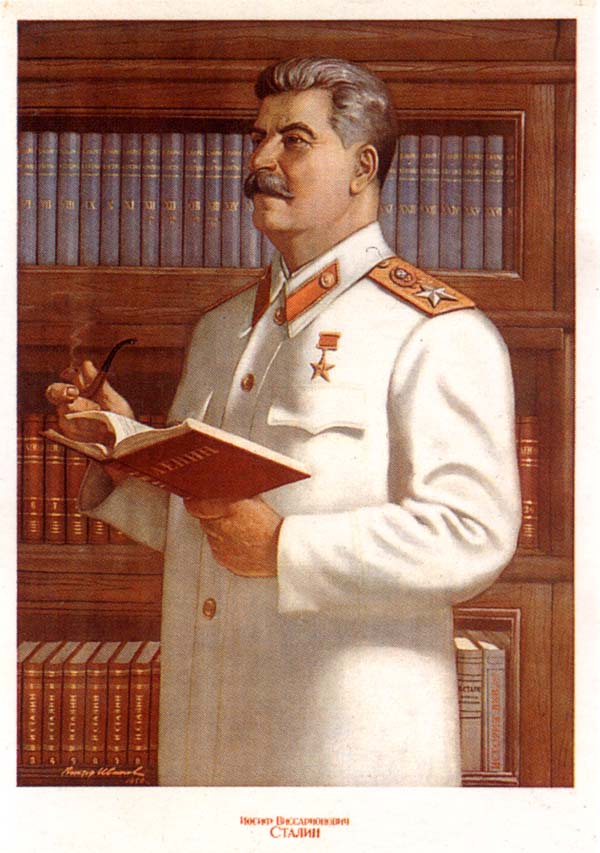 "Dear Stalin, Happiness of People." Online image. Old USSR Posters about Stalin and Soviet People. 5 November. 2007. [http://www.internetvibes.net/wp-content/gallery/stalin-posters/poster27.jpg]
The message of this poster says "Dear Stalin, happiness of people". It is trying to say that Stalin could do anything to make people happy. In the picture, we can see that Stalin looks neat and professional in the picture. By himself holding a book, we might think that he looks like a philosopher. We can also see something like a library at the back of him. It looks as if Stalin was highly educated and is able to lead the Soviet Union. It might be effective because this poster does not involve the country (other posters have backgrounds as the army, soldiers, etc.), so people will believe that Stalin can use his knowledge instead of power to take care of the country.
Poster 2
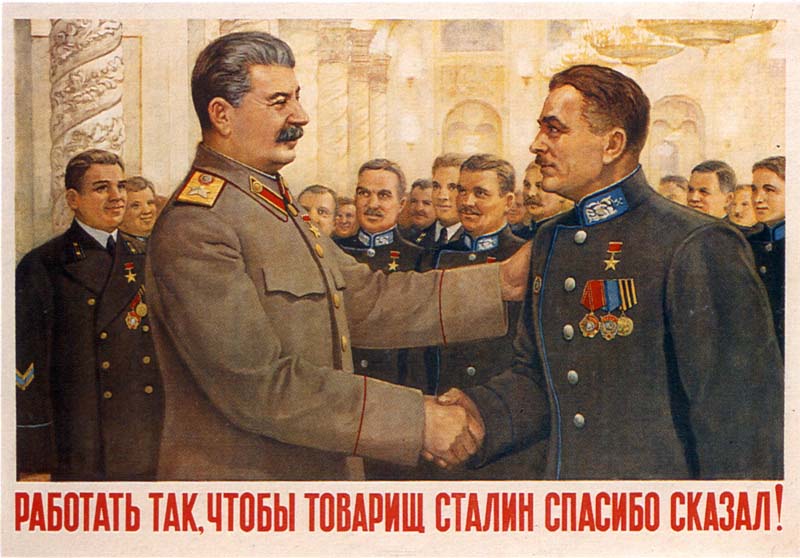 "I'm Looking Forward for New Ideas." Online image. Old USSR Posters about Stalin and Soviet People. 5 November. 2007. [http://www.internetvibes.net/wp-content/gallery/stalin-posters/poster05.jpg]
The message of this poster says "I'm looking forward for new ideas". This is showing that Stalin has contact with other leaders and as the quote says, he is trying to look forward for new ideas. Some people who sees this might think that Stalin is a smart and friendly leader, since he might have conferences or be in contact with other leaders. We can see in the poster that there is Stalin shaking hands with someone else, and with some other executives standing in the background. This poster might be effective because people can see it as an international detail. People from other countries might also see this poster too, and think that Stalin is also a good leader. However, they do not know what conflicts are going on inside the country.
Poster 3
 "
"This poster says "Glory to Stalin the Great!". It is trying to tell that Stalin is the greatest leader of the Soviet Union. We can see that Stalin is wearing his uniform and shows that he is a brave and decisive leader. Also, it looks as if he is touching his heart, so it means that he is loyal to his country. If it is effective or not, it depends on the people's view. Some might say that he is just showing off in his uniform, and also with the army at the back of him. Others might say that he looks brave and a good leader, with that cool look on his face.
Poster 4
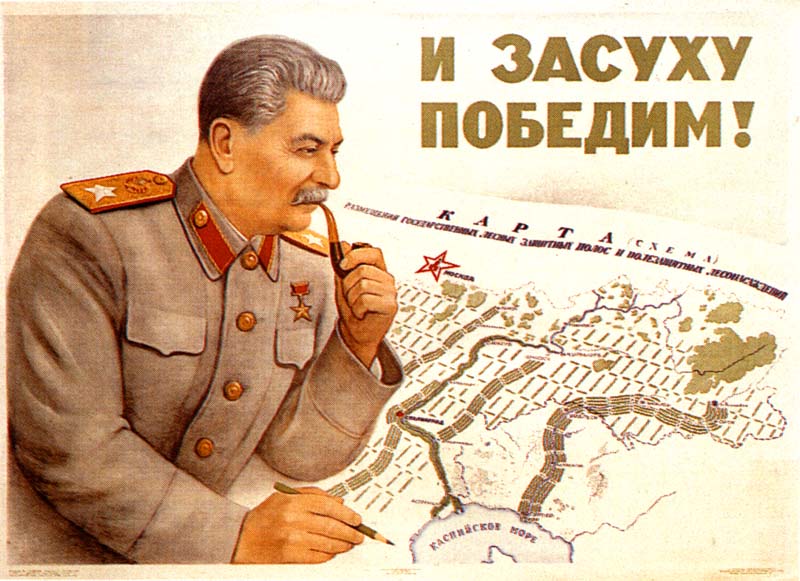 "I will win." Online image. Old USSR Posters about Stalin and Soviet People. 5 November. 2007. [http://www.internetvibes.net/wp-content/gallery/stalin-posters/th/poster36_thumb.jpg].
This poster says "I will win". It is trying to show that Stalin is able to win anything that will make him the best leader of the Soviet Union. It is showing that Stalin has the ability to think and plan different things for the country. In the poster, we can see that Stalin is thinking and has a pencil in his hand, and the country map at the back. From the poster, it seems that Stalin looks smart and well-planned. It wasn't quite effective because some people know that he isn't a good leader and just wants power. For example, he made plans for the Soviet Union, but many people did not agree with them. So, Stalin had enemies.
Poster 5
 "
"Conclusion
After looking through the different posters and propaganda, we can tell about the different times that the Soviet Union has been through, especially the time during Stalin's rule. As we know, Stalin had used propaganda to make people know him and believe that he is god. Different propaganda, like posters, are all different. Some of them involves the country and the army, while the others might tell about his life. Whatever the posters tell about, it all depends on how the people like us see and understand them. When we analyze them, we cannot say that they are right or wrong. This might be the problem why people during that time like to fight each other and create conflicts or wars. But anyway, today we have to learn from these mistakes that people have made. It would be good if people could understand each other and make a nice world.
Subscribe to:
Comments (Atom)